
Robotics and automation
The seam
A robot can do the job and still fail. The systems that last earn something harder to build than raw capability.
They earn a place in the room, and the trust of the people already working in it.
Robots rarely fail at their technical limits. They fail earlier, at the seam where the machine meets the human. It is the footprint that crowds a worker, the arm that blocks a sightline, the dashboard no one believes, or the first impression that reads as a threat instead of a teammate.
That seam is a design problem. Trust gets built into a machine on purpose, starting with the first sketch. It lives in the form, the footprint, and the way the robot communicates what it is doing. That is the part MNML builds. The two robots below had to earn their place, and design is how they did it.
Physical trust Miso Robotics, Flippy
Sharing the room
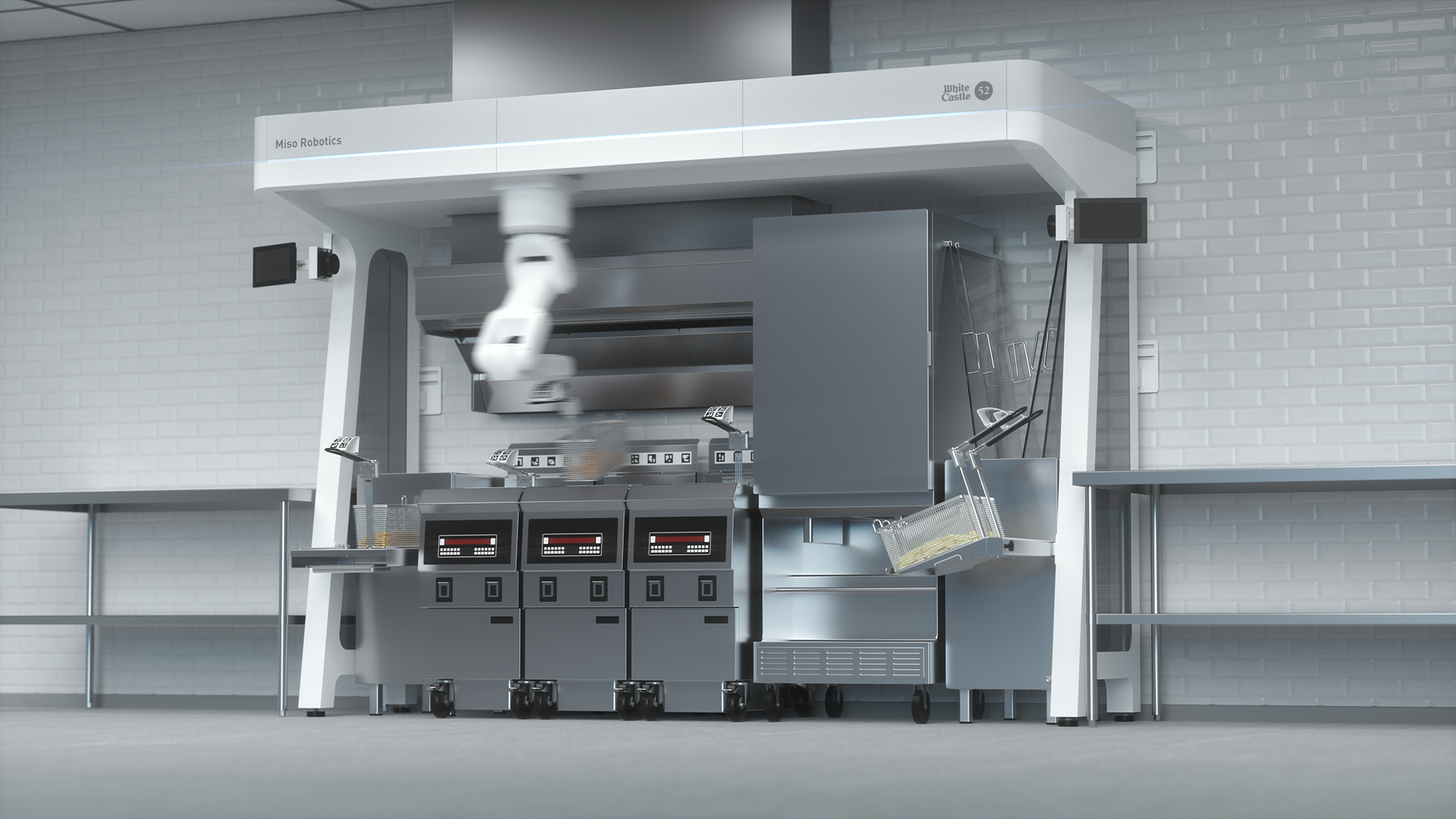
Flippy fries food alongside human line cooks in some of the most demanding kitchens in the country. The hard part was never the cooking. It was coexistence.
The challenge was putting a machine into a hot, fast, tightly regulated space where people already work shoulder to shoulder, and making them willing to keep it there. Nearly every design decision came back to that question.
None of this makes Flippy fry any better. All of it makes a person willing to work beside it. That design work helped Miso turn a pilot into a lasting partnership with White Castle, and the platform has continued to expand across the industry since.
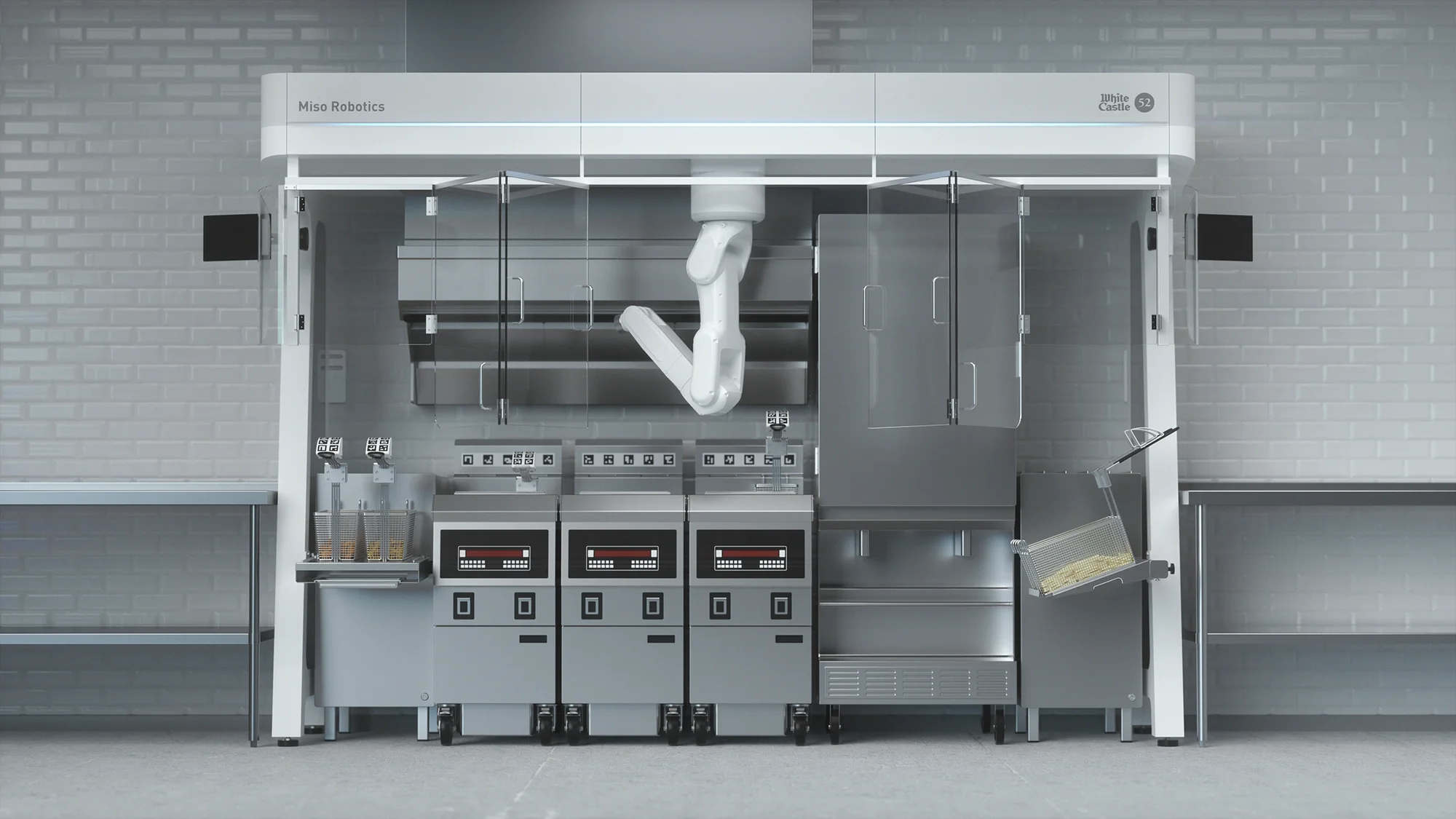
Cantilevered structure
Holds stability on the smallest possible footprint, so Flippy fits a kitchen that's already tight.
—
Open sightlines
Open negative space keeps sightlines clear, so workers are never boxed in or blinded by the machine beside them.
—
Removable barriers
Plexiglass panels mount in front or lift off entirely, for safety and for splatter control.
—
Serviceable panels
Grease-sealed covers that still open up fast for maintenance on the line.
—
Open base
Clear space around the legs lets staff clean the floor around it.
—
Stainless throughout
Custom-fabricated for hygiene, durability, and life on the line.
Informational trust , Budscout
Believing the machine
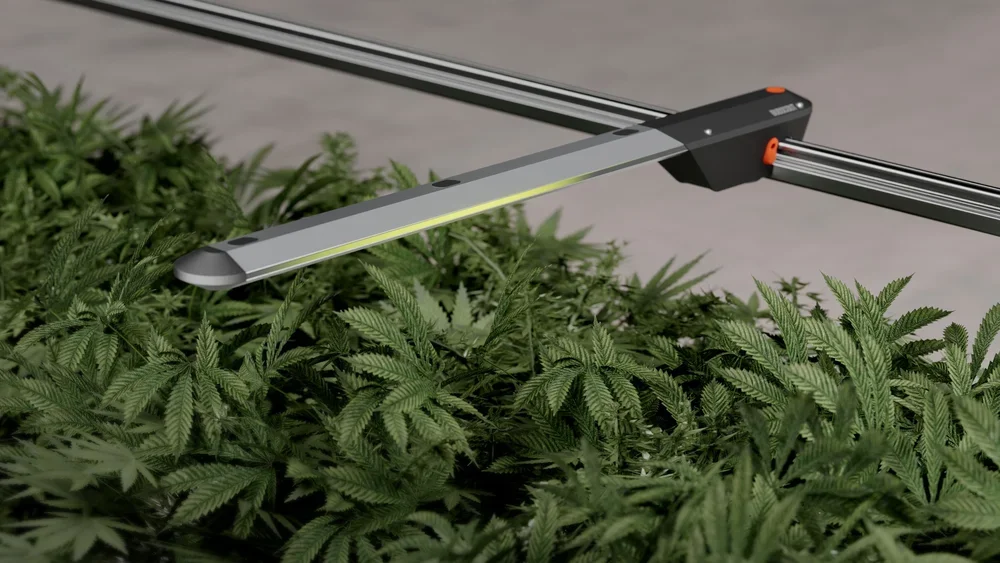
Budscout is an autonomous, AI-powered cultivation robot that scouts a grow around the clock, catching problems before they become losses.
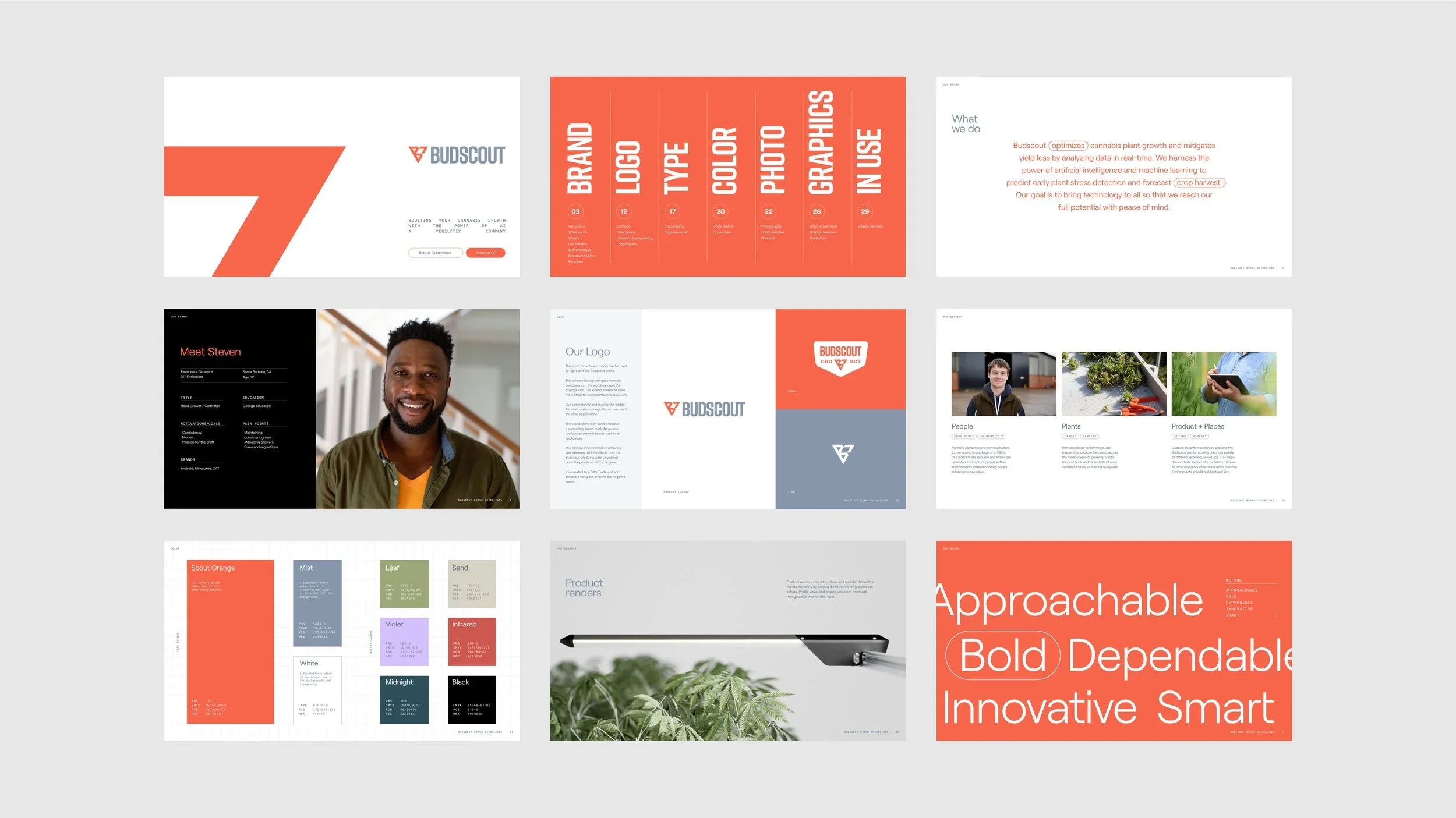
An autonomous system is only useful if the people relying on it believe what it tells them and act on it. MNML designed for that trust on two fronts. First, we translated dense AI output into insight that a head grower and a business executive could each read, understand, and act on, so the same data stayed legible to very different audiences. Second, we built a brand that feels technical and precise without feeling cold. It is approachable and modern, the kind of system a grower is willing to let into their operation. The promise behind all of it was simple, and it became the tagline. Cultivate with Confidence.
Even the hardware was built to be accepted. A universal T-slot rack adapts to the grow racks customers already own, so adopting Budscout means fitting it into an existing setup rather than rebuilding around it.
As Budscout's end-to-end partner, MNML designed and engineered the robot, sourced its manufacturing, and built the brand, the app UX, and the launch. We shaped every surface where the product meets a person.
Perceptual trust, TEMI
Earning a welcome
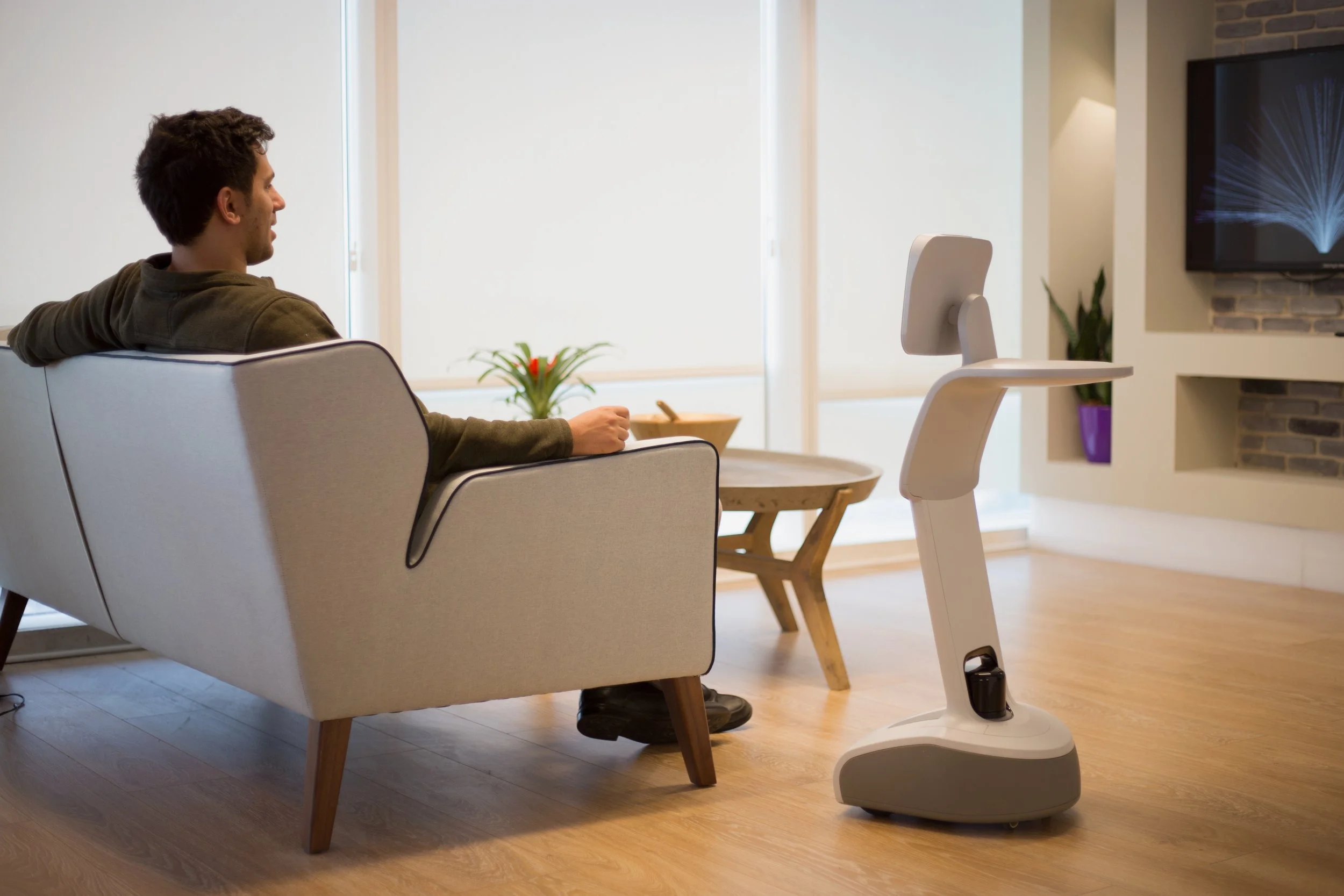
Teamy was a mobile robot built to live in people's homes. The first question was not what it could do. It was how human it should look.
MNML partnered with Roboteam to answer that. We mapped the landscape of home robots, from voice-only hubs to full humanoids, and found a trap waiting at the human end. The more a robot looks like a person, the more people expect it to act like one, and today's technology lets them down. Push the resemblance further and it stops feeling friendly and starts feeling unnerving.
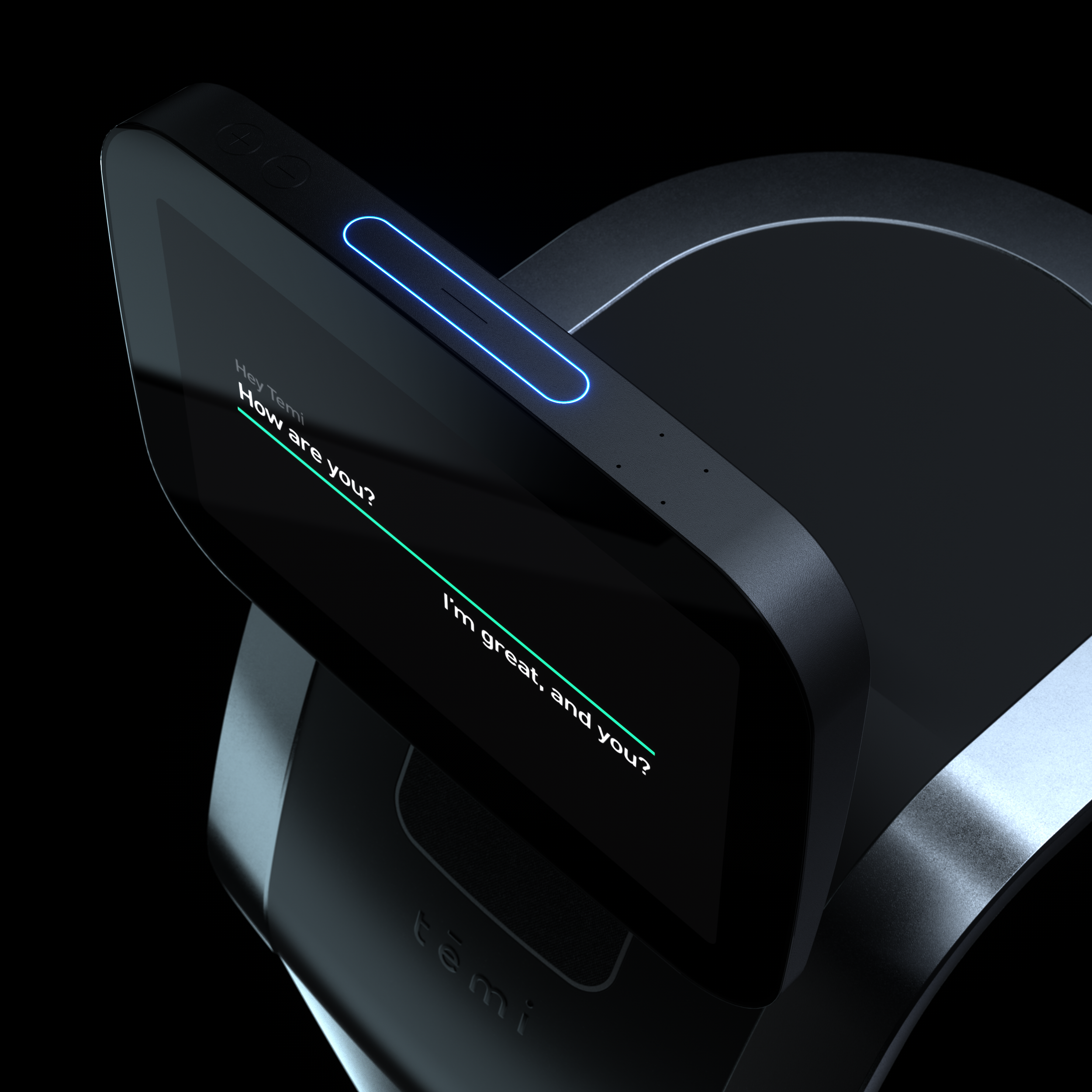
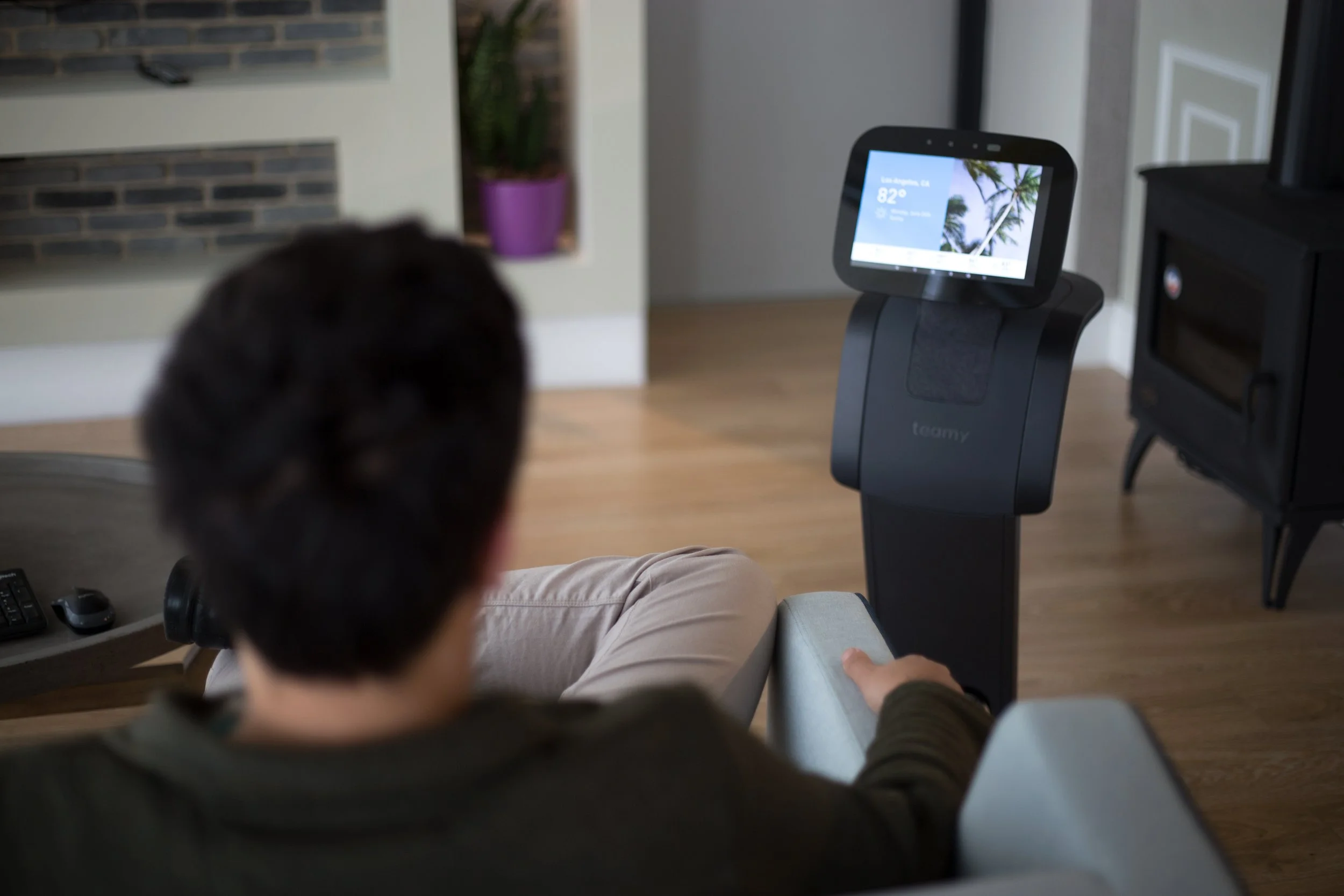
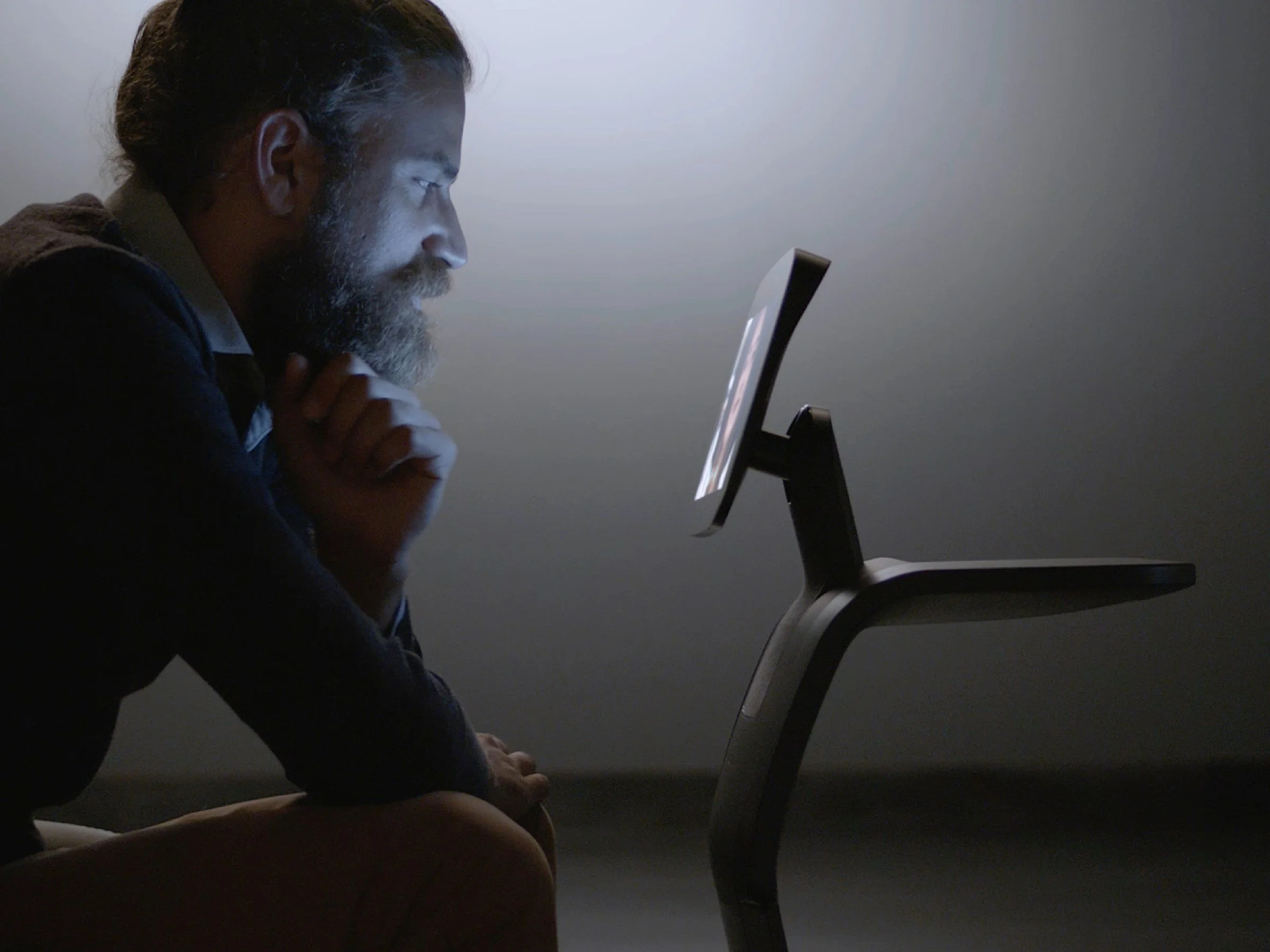
Our recommendation was to pull Teamy back toward a more abstract form. Relatable enough to feel approachable, simple enough to set honest expectations, and characterful enough to be liked. We studied how the robots people love in fiction earn that loyalty, and how minimal consumer products earn a place in the home, then carried it into Teamy's proportion, its materials, and the way its screen and body read as a single object.
The work set a clear direction. A more abstract, approachable form, paired with real physical utility, would make Teamy a robot people welcome rather than merely tolerate. Form here was never decoration on top of the engineering. It decided whether the robot would be invited in or kept at arm's length.
Perception
Tune form, proportion, and detail so Teamy reads as playful, friendly, and approachable.
—
CMF
Pick colors, materials, and finishes that let it belong in a real home rather than a lab.
—
Utility
Add simple physical features so the robot earns its footprint as a mobile platform.
—
Interface
Unify the screen and the body so interface and hardware express one personality.